Most conservation stories here have a headline species. This one doesn't. A wildlife rehabilitation centre mostly treats animals that never make the brochure: a raptor hit by a car, a duiker fawn that lost its mother, a tortoise caught in a snare set for something else. They matter just as much.
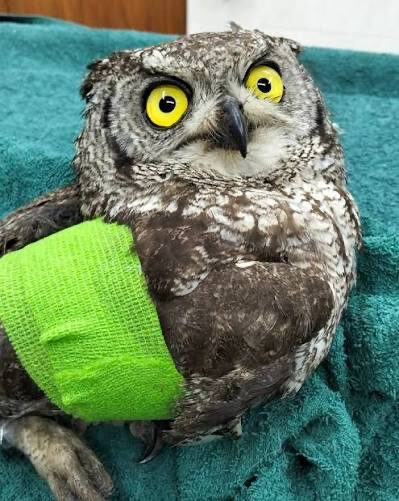
A spotted eagle-owl recovering from a wing injury.
Who FreeMe are
Adel Malan founded FreeMe Wildlife in 2007. It works on a "One Health" approach: the health of people, animals and the environment belong together. Its original centre in the Midlands admits over 2,000 patients a year, and it has released animals from 33 endangered, threatened or protected species. In 2019 it helped save more than 2,000 Amur Falcons after hailstorms destroyed their roosts.
Why here
Zululand has care for large species such as rhino, but nothing like it for smaller animals, and injured wildlife from the north of the province has to travel far to get help. In 2019, FreeMe and Wild Tomorrow partnered to build a centre near Hluhluwe for birds of prey, ground hornbills, serval, caracal and jackal, tortoises and monitor lizards, and herbivores from scrub hares to antelope.
Part of a bigger corridor
The centre is planned as part of the corridor Wild Tomorrow is restoring: sand forest and a wildlife route reaching towards False Bay.
Not open to visitors
FreeMe has a strict hands-off policy. Animals are never tamed, petted or shown to the public, because animals that get used to people are harder to release back into the wild.
Working together to enrich lives.FreeMe Wildlife's stated ethos
→ Read: Stitching a coastline of reserves back together ← Back to Conservation